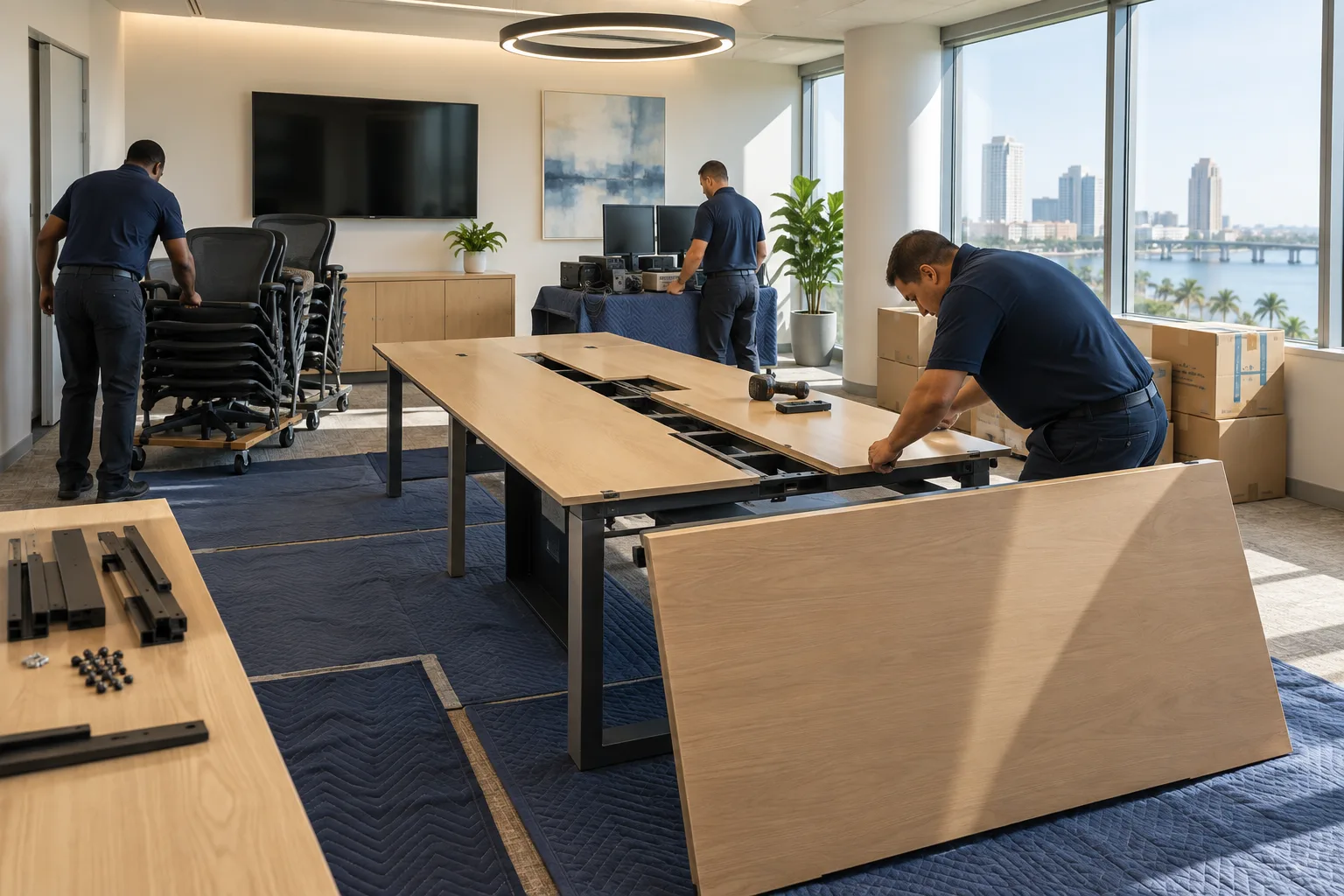
Start with a room-by-room list. Mark each item remove, keep, transfer or needs approval. That last category prevents an unlabeled cabinet, leased copier or employee item from leaving by mistake.
Inventory the physical load
- Desks and tables, with dimensions
- Task and guest chairs
- File and storage cabinets
- Whiteboards and wall-mounted items
- Breakroom appliances and supplies
- Printers, monitors and electronics
- Boxes, paper and loose contents
- Fixtures attached to the building
Separate information from furniture
Paper records, hard drives and network equipment need the organization’s approved retention or destruction process. A general hauling load is not a substitute for documented records handling. Remove badges, keys, payment devices and personal information before the crew arrives.
Measure the route
| Checkpoint | What to record | Why it matters |
|---|---|---|
| Doors and turns | Narrowest width and tight corners | Shows whether large tables need disassembly |
| Elevator | Cab size, reservation and padding rules | Controls load size and work window |
| Loading point | Dock, curb, gate and carrying distance | Affects labor and truck position |
Choose the on-site approver
One person should answer keep-or-remove questions and approve scope changes. Give the crew a marked floor plan or zone list when several departments are involved. End the walk-through by identifying the rooms that must remain untouched.
Before work begins, confirm what the written estimate says about disassembly, electronics, sweeping and additional items.