Freestanding displays and tables
Include it in the inventory with a rough count, size or volume.
Remove displays, shelving, backroom contents and turnover material from a storefront or shop.
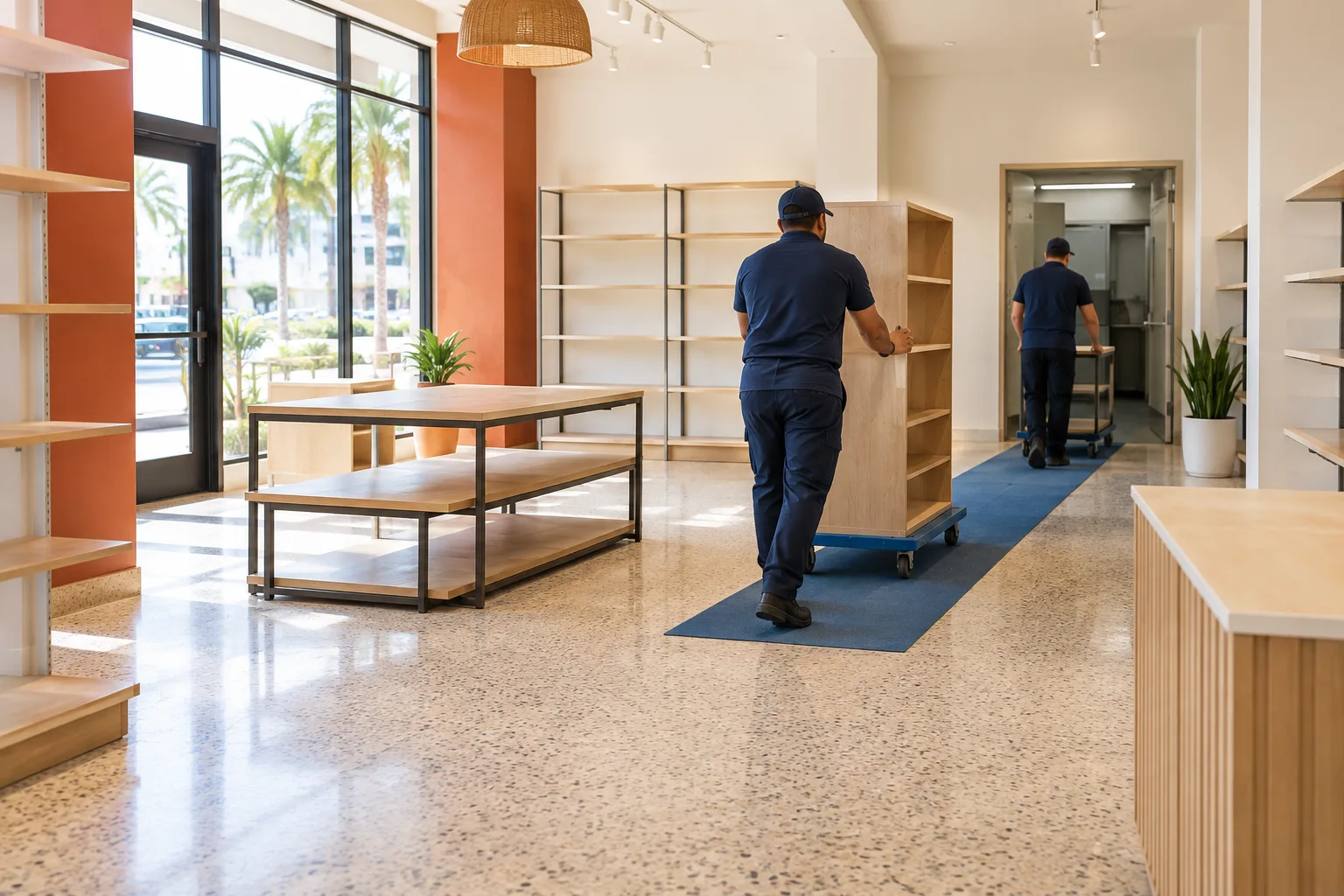
Remove displays, shelving, backroom contents and turnover material from a storefront or shop.
The final load should be grouped by material and area. Anything unusually heavy, fixed to the building, liquid, sharp, confidential or regulated needs to be identified before arrival.
Include it in the inventory with a rough count, size or volume.
Include it in the inventory with a rough count, size or volume.
Include it in the inventory with a rough count, size or volume.
Include it in the inventory with a rough count, size or volume.
Separate it and ask for written acceptance or the appropriate specialist.
Separate it and ask for written acceptance or the appropriate specialist.
Separate it and ask for written acceptance or the appropriate specialist.
Separate it and ask for written acceptance or the appropriate specialist.
Check doors, corners, thresholds, stairs, elevator size and surface protection.
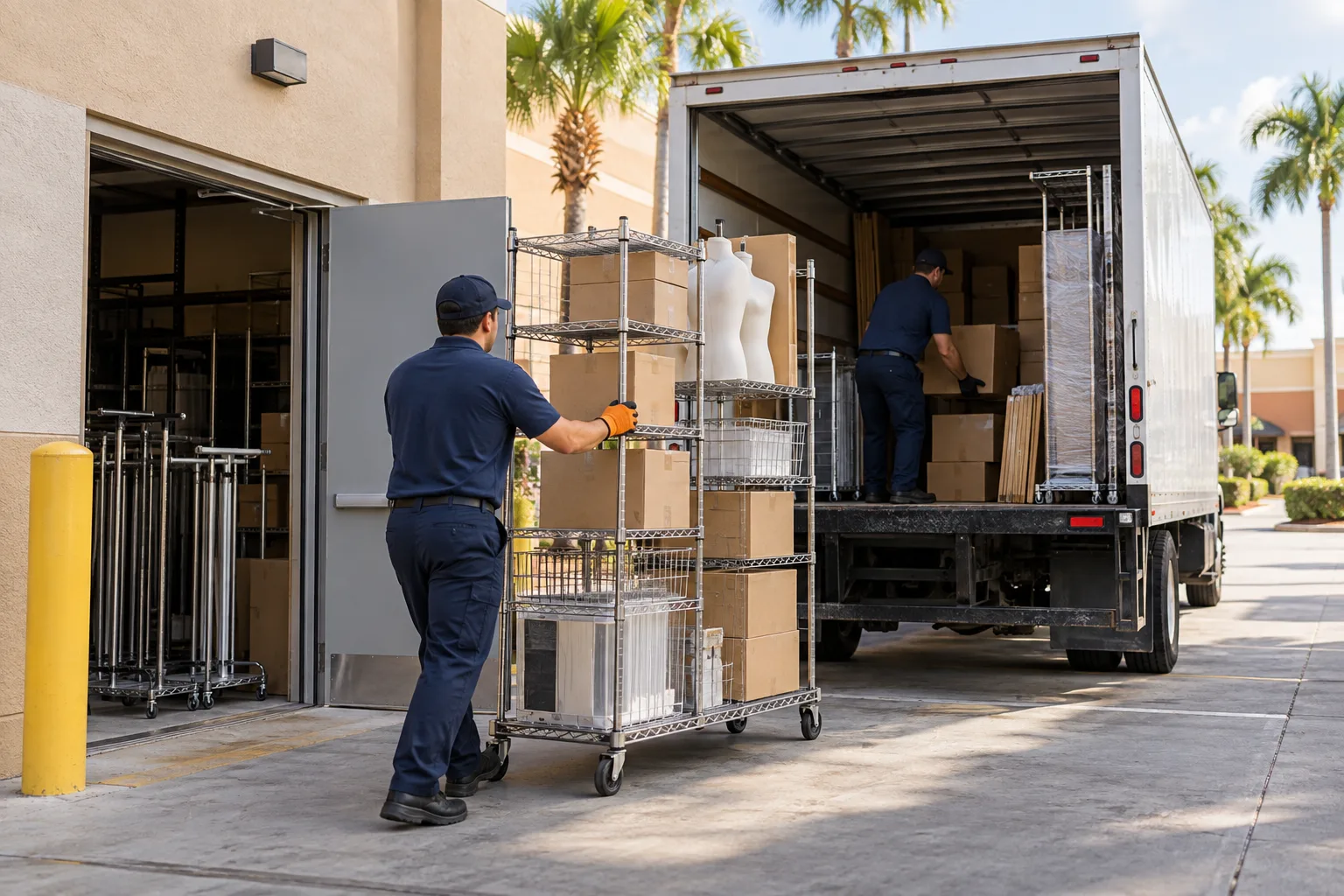
Confirm the dock, service elevator, gate or curb window with the property.
Keep exits, fire lanes, accessible routes and customer paths open.
Have one contact available to settle scope changes before loading.
For a preparation tool, read the related field guide.
That is the purpose of crew-loaded service. Confirm rooms, floors, disassembly and carrying routes in the estimate.
Keep regulated material, confidential records, data-bearing devices and disputed items apart from the general load.
Ask the written estimate to state the expected condition. Removal, broom-sweeping and detailed cleaning are different scopes.
Share the item types, volume, access path and timing by phone so the scope can be reviewed before work begins.