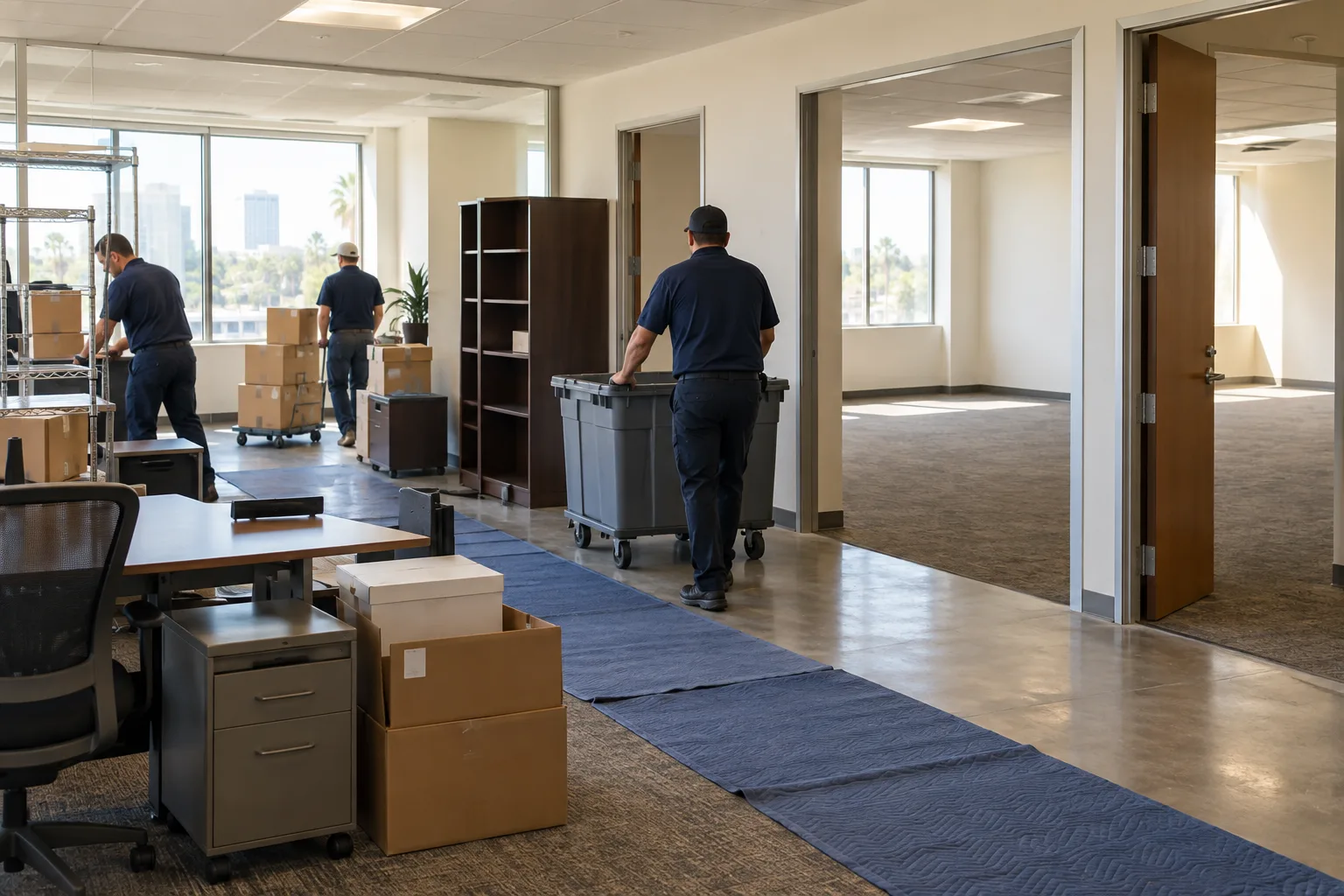
Start with the lease, possession status and your organization’s approved process. The person ordering removal should be able to show authority over the premises and contents. If ownership is uncertain, move the item into the review category rather than the truck.
Use a four-list inventory
- Landlord items that stay
- Tenant items authorized for removal
- Leased or vendor-owned equipment
- Items needing legal or management review
- Keys, badges and access devices
- Records and data-bearing equipment
- Building fixtures and connections
- General non-hazardous contents
Photograph by room
Take wide views and closer images of disputed, damaged or valuable-looking items. Keep original timestamps and filenames. Pair the photo set with a simple floor plan or room list so the crew and approver use the same names.
Build the turnover sequence
- Secure authority and access.
- Remove records, keys, personal data and leased equipment through the correct process.
- Mark landlord fixtures and protected areas.
- Walk the removal inventory with the estimator.
- Reserve dock, elevator and parking access.
- Complete a final keep/remove walk-through before loading.
- Document the cleared condition against the agreed scope.
Keep cleaning and repair scopes separate
Junk removal, demolition, janitorial cleaning, repairs and lock changes are different jobs. The estimate should say whether the crew will sweep the immediate work area and whether installed fixtures are excluded.
Plan the next handoff
Give the leasing, maintenance or build-out team a clear finish point: rooms emptied, named fixtures retained and unresolved material isolated. That makes the cleanout a useful step in turnover instead of another source of questions.