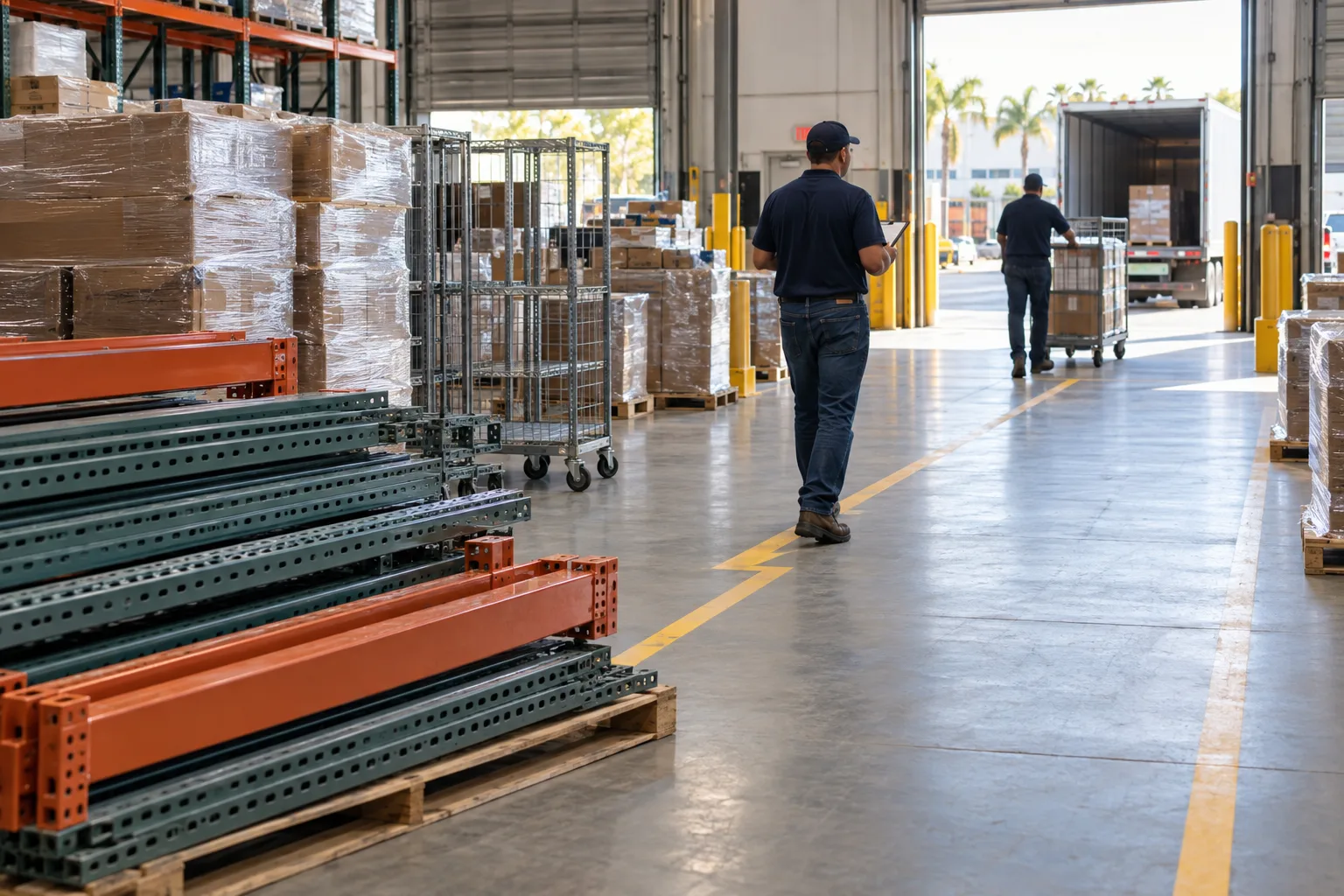
Draw the active receiving and shipping lanes first. Then assign the cleanout a separate staging zone and time window. A cleanout pile beside the nearest bay can interrupt normal operations and create a second move.
Divide the floor into five zones
- Keep: active stock and equipment that cannot move.
- Transfer: items going to another department or site.
- Remove: accepted non-hazardous material for the hauling crew.
- Review: unknown, regulated, data-bearing or disputed items.
- Empty staging: space reserved for carts and safe movement.
Protect the dock schedule
| Question | Decision |
|---|---|
| Which bays remain active? | Keep the cleanout route outside their turning and pedestrian zones. |
| When can a removal truck occupy a bay? | Use a written window with time for setup and release. |
| Who controls dock traffic? | Name one warehouse contact for drivers and crew leads. |
| Where can carts wait? | Choose a stable surface outside fire lanes and trailer approaches. |
Identify installed and heavy items
Racking, conveyors, compactors and powered equipment may require disconnection, dismantling or a separate contractor. Record dimensions, anchoring, condition and the available handling equipment. Do not assume a general removal crew will cut, rig or disconnect an installed system.
Close the shift cleanly
At each break or shift end, clear the travel lane, secure remaining material and update the zone list. A staged cleanout should leave the warehouse easier to operate, not create a new obstruction.